

Important impact assessment developments of 2023 and 2024
Recent extreme weather events such as floodings and droughts led to an increase in recognition that sustainability is integral to economic growth. There is a heightened focus on climate adaptation, transparent corporate reporting and renewable energy adoption, driven by regulatory frameworks and growing stakeholder demands. Fortunately, 2023 and 2024 bring significant advancements in impact assessment, driving greater precision and actionable insights. This article gives an overview of developments of impact assessment methods in the years 2023 and 2024. It was written by Eline Willems and Laura Schumacher with contributions from Archana Datta, Anne-Marie Boulay, Bo Weidema, Peter Fantke, Cecille Bulle, and Valeria De Laurentiis.
New impact assessment methods
We start this article with a highly anticipated impact assessment initiative, the Global Guidance on Life Cycle Impact Assessment (GLAM) from the Life Cycle Initiative. The project involved over 200 researchers worldwide and aims to establish a comprehensive, consistent, and global environmental LCIA method.
GLAM introduces several new impact categories and updated characterization factors (CFs). These are categorized into three Areas of Protection:
- Ecosystem Quality: GLAM includes updated CFs for freshwater and marine eutrophication, water consumption, climate change, land use, marine plastic, and ecotoxicity. They developed a terrestrial acidification model and they applied Global Extinction Probabilities systematically to each impact category to account for species richness and vulnerability.
- Human Health: GLAM includes updated CFs for climate change (heat and cold stress), fine particulate matter, human toxicity (including near-field and far-field exposures), ionizing radiation, lifestyle impacts (nutrition and physical activity), work environment impacts, and water scarcity (domestic and agricultural).
- Socio-Economic Assets: GLAM focuses on minerals and energy resources. These are complemented by soil related impacts on ecosystem services, including soil organic carbon, erosion reduction, groundwater regeneration, and mechanical and physicochemical filtration.
GLAM compiled a global inventory of emissions and resource use to calculate global normalization references for each Area of Protection. For these Areas of Protection, they derived global weighting factors from a large-scale survey of over 3000 citizens across different income levels. Both absolute and population-share adjusted weights are available.
The GLAM version 1.0.2024.10 was officially launched in October 2024 at the SETAC Europe 26th LCA Symposium and shall be implemented in the main LCA softwares in 2025. While some publications are already available, several are still in preparation, or under review. The project is ongoing and further updates will follow.
Generation and updates of characterization factors
Advances in impacts of plastic litter in aquatic environments
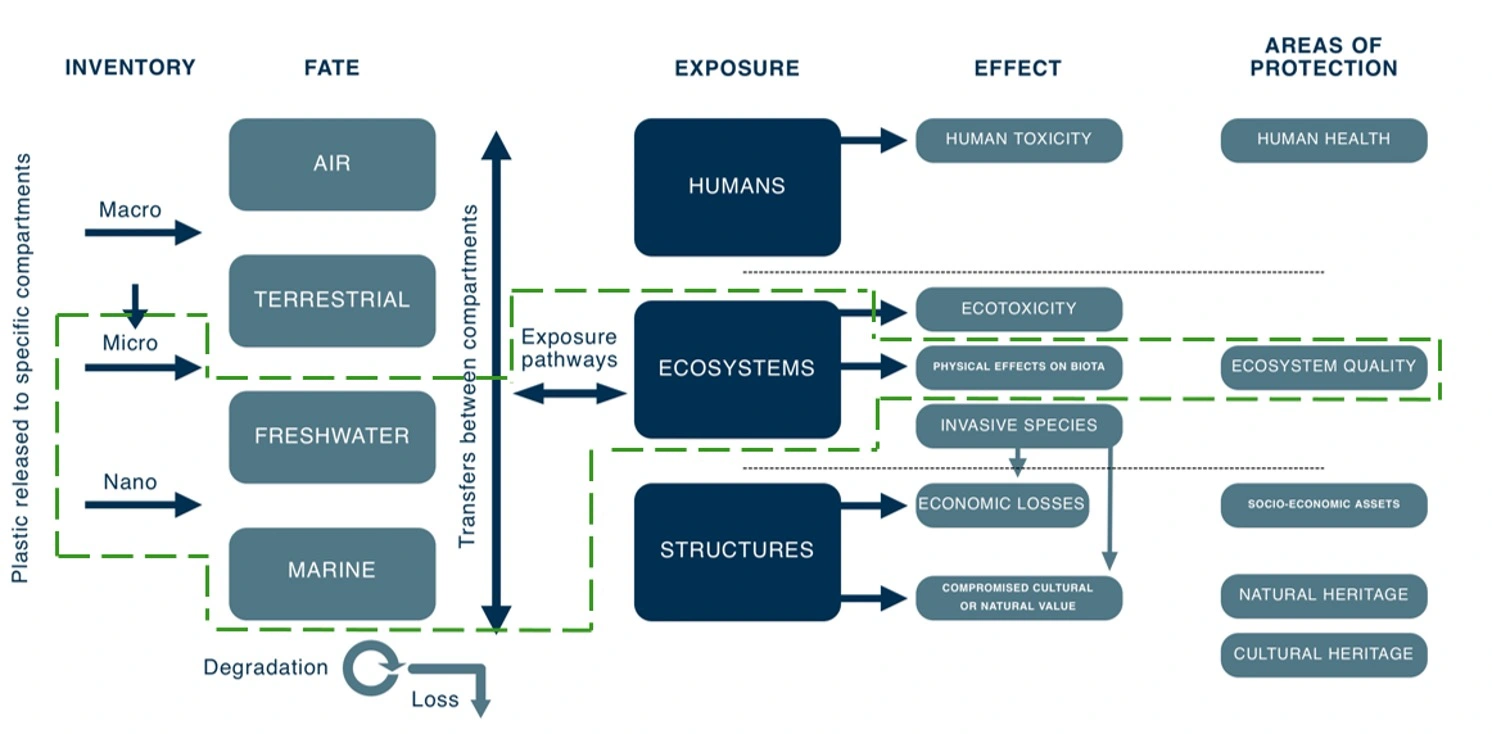
As you might remember from earlier articles in this series, the goal of the MarILCA working group is to foster the development of marine impact assessment in LCIA, starting with plastic litter. Since our last article of this series, the working group developed new CFs for macroplastics and updated the CFs for impacts of microplastics emissions to the aquatic/marine environment.
- Macroplastics: For larger plastic debris, the CFs focus on entanglement effects from abandoned, lost, or discarded fishing gear on marine megafauna (Høiberg et al., 2024).
- Microplastics: Existing CFs for microplastics in the marine environment were updated to include multiple additional compartments and ecosystems, such as freshwater and terrestrial ecosystems and sediments. Additionally, several polymers and natural fibers were added for a more comprehensive assessment. While the academic papers for these updates are still under review, some CFs have already been included in the last update (Nov. 2024) of IMPACT World +, and have been recommended as part of the GLAM initiative. An upcoming update includes a continental-scale regionalization (eight world regions).
Ionizing radiation effect factors and characterization factors
Although many industrial processes release radionuclides into the environment, their potential effects on human health have been often overlooked in LCA. As part of the GLAM initiative mentioned earlier in this article, a team of researchers from the UK, USA and Denmark developed a new set of characterization factors for ionizing radiation impacts on human health. Fate and exposure are based on a multimedia mass balance model that is aligned with the USEtox model for human toxicity and ecotoxicity impacts. The researchers considered relevant pathways for assessing potential ionizing radiation impacts from nuclear waste disposal, a critical aspect for comparing alternative nuclear fuel cycles. Effect factors are based on the latest data provided by the International Committee on Radiological Protection and the Global Burden of Disease project series. The article includes characterization factors at mid-point and damage level for 115 radionuclides that can be potentially released into eight environmental compartments.
PM2.5 indoor activity characterization factors
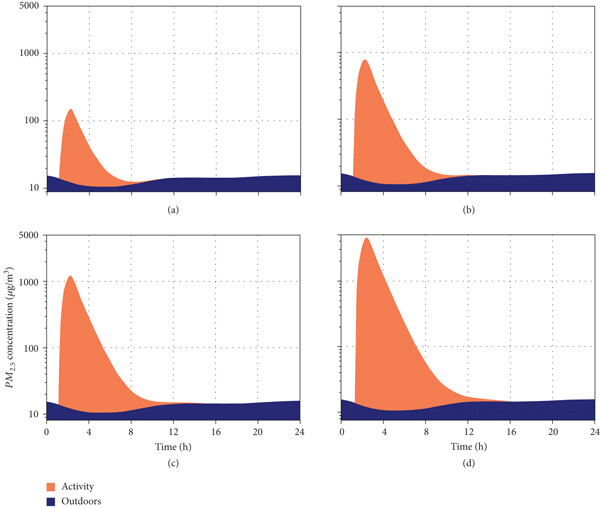
A team of French and Danish researchers recognized that although we spend around 90% of our daily life indoors, the effects of fine particulate matter (PM2.5) emitted indoors were not yet included in various LCIA methods. In their study on PM2.5-related health impacts from indoor activities, the research team developed a model to derive emissions (in mass of PM2.5 emitted indoors per hour of activity) and human intake fractions (in mass of PM2.5 inhaled per kg emitted indoors). These emissions and fractions are based on parameterizing a dynamic indoor air pollution model. Factors were derived for 19 indoor activities under different indoor occupancy, air change and source strength scenarios, ranging from candle burning and toasting with low emission rates to using cook stoves with high emission rates. Emissions and intake fractions were coupled with effect factors developed in a separate study based on an exposure-response model from the Global Burden of Disease (GBD) effort, to derive characterization factors (DALY/kg PM2.5 emitted) and impact scores (DALY/hour of activity).
Human toxicity effect factors
An international collaboration between academic and public institutions from Europe and the USA developed a set of consistent human toxicity effect factors for more than 10,000 chemicals for which regulatory toxicity values are mostly lacking. These factors are based on curating and analyzing a large amount of chronic in vivo animal toxicity data. Effect factors were developed separately for oral (ingestion) exposure and inhalation exposure, and cover reproduction/developmental toxicity effects and other non-cancer effects in two separate LCIA indicators. The effect factors were used to train machine learning models to potentially predict the effect factors for a much larger range of chemicals relevant for LCA, and these have been proposed for inclusion into the latest near-field/far-field version of USEtox for characterizing human toxicity and ecotoxicity impacts.
Improvement of methodological frameworks in impact assessment
Major updates of the IMPACT World+ impact assessment method
IMPACT World+ has recently undergone significant updates, introducing new versions and refining its methodologies to enhance environmental impact assessment.
The update includes the introduction of new indicators:
- Plastic physical effect on biota, an impact category which evaluates the impact of plastic resins on aquatic ecosystems (see part on MarILCA earlier in this article).
- Fisheries impact, assessing biodiversity loss caused by fisheries at the damage level.
- Marine and terrestrial ecotoxicity, integrated using USEtox v2.
- Photochemical ozone formation, which now follows the ReCiPe 2016 methodology with added impact categories for human health and ecosystem quality.
Existing indicators also got an update:
- Particulate matter formation now integrates regionalized characterization factors using a new PM model.
- Water availability and water scarcity indicators now use regionalized models and harmonized methodologies, including the latest AWARE2.0 model.
- Ozone layer depletion reflects the latest ozone depletion potential values, with the time horizon extended to infinity.
- Climate change indicators incorporate either the carbon neutrality approach or a -1/+1 approach for the quantification of biogenic carbon, depending on which version users select. Climate change damage factors for human health and ecosystem quality were updated based on the IPCC 2021-AR6 and on the latest WHO and GBD data.
Social footprinting method
The social footprinting methodology is a streamlined approach to providing comprehensive aggregated “life cycle sustainability assessment” (LCSA) results. It combines input-output data on added value and work hours with an impact assessment focusing on the macro-scale of the non-production-specific impacts. An important finding is that 78% of all impacts are quantifiable from national statistics without the need to access detailed data about specific technologies or enterprises.
The method and data are open access, including quantitative social impact data for the year 2019, for 163 countries. In terms of GDP, population and impact, this covers more than 99% of the world. The country-specific levels of wellbeing are calculated from the Cantril scores of the annual World Happiness Report, adjusted for lost life years. The global potential level of wellbeing is calculated to be 0.961 QALY/person-life-year. The social footprint is calculated as the difference between actual and potential wellbeing in a specific country. The method also includes new conversion factors between QALY and monetary values.
You can find the work and most recent developments in the following links: Weidema B P. (2023), Weidema B P (2022), Weidema B P (2022)
Soil organic carbon as an indicator of land use impacts in life cycle assessment
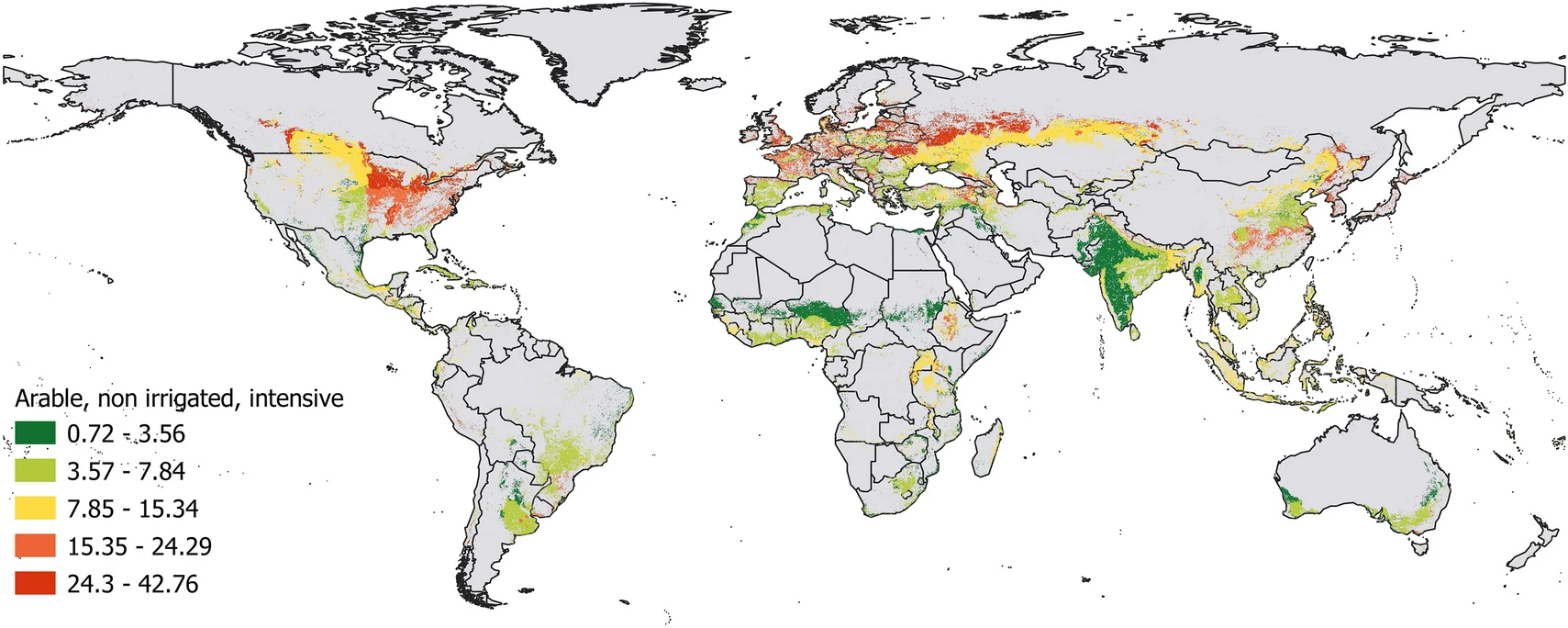
Researchers from the European Commission’s Joint Research Centre (JRC) and several other institutions jointly proposed an approach to quantify the impacts of land use on soil quality, using changes in soil organic carbon (SOC) stocks as a proxy. This follows the latest recommendation of the Life Cycle Initiative. The approach provides a set of characterization factors for 56 land use classes in the form of maps at 1 km resolution, but also aggregated at national and global level.
Results of the model showed that artificial land uses – such as urban built and traffic areas, as well as construction, dump and industrial sites, but with the exception of urban green areas – present the highest negative impact on soil quality. These are followed by severely degraded pastures, intensive arable lands, other agricultural land, and high-intensity grazing pastures. Extensive pasture and flooded crops show, on average, an increase in soil organic stock.
Ecotoxicity effect modeling
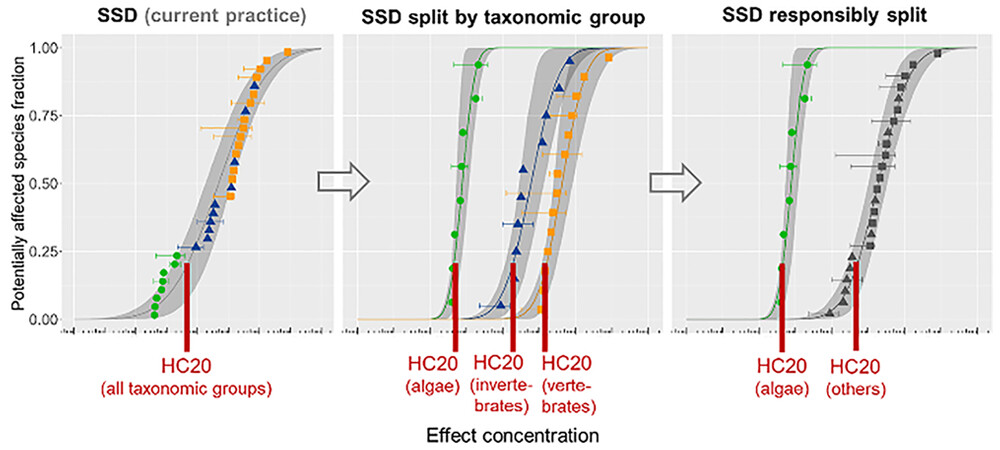
Researchers from Denmark and the Netherlands jointly developed a decision tree for improving the robustness of freshwater ecotoxicity effect models based on splitting species sensitivity distributions (SSDs) for different taxonomic species groups. This is particularly relevant for comparing chemicals with specific modes of action (i.e. affecting certain species groups more than others), such as insecticides – which generally target invertebrates over other species groups. SSDs and related effect factors for LCA can vary as a function of selecting all taxonomic groups or only the primarily affected ones. This is especially true in the context of damage modeling on functional ecosystem quality, since species groups have different roles in maintaining the functioning of an ecosystem. The research team provided these split SSDs, specific to taxonomic groups, for 180 data-rich chemicals. They can be used as a starting point for providing more accurate and robust effect factors at different levels of ecosystem damage and for developing ecotoxicity prediction models where experimental test data are lacking.
Pesticide field emissions (LCI modeling)
A team of Danish, French and Chinese researchers developed an approach for estimating emission fractions for agricultural pesticides for use in LCA and other comparative assessment frameworks. These emission fractions primarily consider drift deposition as a function of the pesticide application method and the current crop, under field conditions. The fractions also account for differences in spray practices in relation to the treated crop fields. The resulting pesticide emission fractions are complementary to emissions associated with other environmental processes, such as leaching through the soil column or subsurface run-off. In addition, they can be readily combined with human toxicity and ecotoxicity characterization factors to derive impact scores per unit of mass of applied pesticide in a given foreground scenario.
Laura Schumacher
Expert
The current human influence on earth systems is unsustainable. To lower this impact it needs to be understood first. Working in sustainability metrics combines my passion for modelling and understanding human influence with my drive to lower the environmental impact of daily practices.
Eline Willems
Sector Lead Chemicals
To make the world a better place we need to face sustainability challenges. Providing data-based solutions will help to make better decisions in the future and take on these challenges. I want to be a part of this journey.